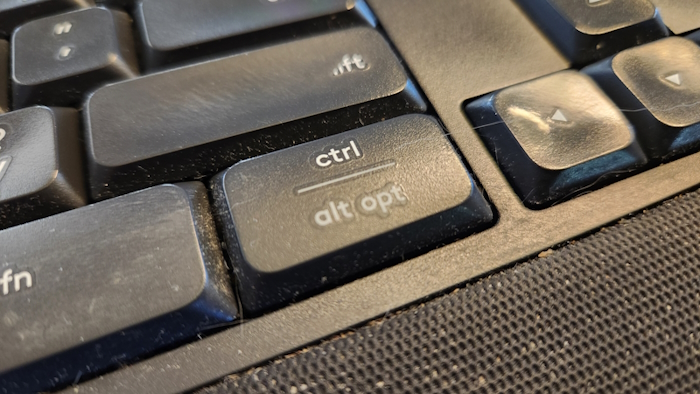
(Or, how being overwhelmed can really suck)
Aside: I’m a couple days behind on this one, mostly because it kind of got away from me. Who knew I had so much to say about digging out of the Sea of Overwhelm?
Unless you’re new to the circle of folks who hang around with me, you know the past few months have seen me digging myself out of a pit of sorts.
Life rolled on me, and my brain got caught up in other places—as it should have—and earlier this year, I found the writing part of my life had gotten all gagged up. Turns out that being a writer doesn’t mean I’m absolved of the need to deal with the not inconsiderable ups and downs that we all work through. Being a writer, however, does have its unique quirks when it comes to dealing with stress, burnout, and that feeling we can get that comes with being overwhelmed.
Particularly, being an indie writer.
Now that things are moving along, I want to touch on a few points.
Maybe this will help you deal with these things, even if you’re not a writer.
Let’s start here.
At one time, I did a lot of sim racing. Today, the biggest purveyor of that sport is iRacing, but back then my choice was Grand Prix Legends, or GPL. It was a beautiful game. The first to have graphics that matched the romance of racing, and focused on the most beautiful of all environments, the grand prix racers and tracks of the late 1960s. Lotus. Ferrari. The sluggish BRM and Honda. The Cooper. Brabham. Dan Gurney’s American Eagle.
There’s never been a more beautiful or deadly time in racing.
The cars were fast, and the tracks were dangerous.
I cannot begin to estimate the hours I spent behind the wheel of those virtual cars.
It was fun.
More important for this conversation, it was one of those hobbies that required so much attention to the moment that it served as a defense mechanism against the pressures of real life. I could not go fast if I didn’t give 100% of my brain to the car, and as most psychologists will probably confirm, if you give 100% of your brain to something for long periods of time, it allows certain problems of the day to slide away.
Consider sim racing to be meditation, at speed.
I was so into this sport that Lisa, my sweetie, offered to send me to one of those fantasy programs and drive a real race car. While I love her even more for suggesting it, I immediately blanched.
“No way,” I said.
Surprised, Lisa asked why.
My answer?
“Because real life doesn’t have a reset button.”
You see, in GPL, when I went too fast and missed the brake point or apex of a turn, or if I made a bonehead move and bumped another car, or for whatever reason went caroming into a tree, all I needed to do was to hit the CTRL-R key, and I was back in the pits with a fresh car, engine rumbling and ready to run. No crunched legs. No medics. No fire. No crutches or painful PT in recovery. CTRL-R solved all problems.
But when events of real life crash into me, real life makes me find my own way out, thank you very much. Or, if real life does give me some clues about things I might be able to do to toggle my CTRL-R keys, those clues are nowhere near as obvious or easy as that CTRL-R on my keyboard.
Real life’s reset button is often visible only in retrospect—if then.
Oh, sure, friends and family can point me to things that might be helpful, but, as the saying goes, you can lead me to answers that work for you, but you can’t make those answers work for me unless I decide they do. Or something like that.
Real life makes us all figure out our own CTRL-R reset buttons.
Which is what I want to talk about.
Because This Is Critical.
As I’m going to say a few more times in this piece, the main thing a writer needs if they are going to make this into a long-term career (meaning simply that they continue to work as a professional, no matter their income), is to find ways to keep their emotional balance stable enough that they can continue to do their best work.
If you agree, you understand why being able to find that hidden CTRL-R key is so valuable.
Sometimes when I’m feeling a bit stressed, taking a quick break is enough to toggle my reset. Just a quick walk around the block, maybe. Or an hour off at lunch. Sometimes it’s a well-timed conversation with an expert, or a sudden fresh perspective that gets me going again. This is probably why I’m usually in full experience mode for a bit of every day, watching documentaries or listening to podcasts, or whatever. Input toggles my mind to think in different ways, and those new ideas often serve as something akin to min-CTRL-R keys for me.
Other times I need something bigger.
A full-blown mental health day (even if I don’t call it that). A completely fresh perspective. A big step away from something for sanity’s sake. A vacation at the right place can recharge my battery.
Or, perhaps counterintuitively, sometimes applying the mental whip to myself to press through and just get things done can do the trick. This last is why a life roll at the absolute wrong time can cause a multiplication of problems. I am an achievement-minded person. Sometimes simply getting a task done can help me get into a place where I can handle the world around me better.
Given that, let me think about the life of a “normal” person who works a day job.
They most likely have a team of other workers. Which means they can (at least sometimes) put in half-effort in the workplace, and things can still work out. You know what I mean. Heck, half the time even a top performer can do that and no one will even notice they’re working at half-throttle.
This is because when you’re in a team, there’s usually someone there to pick you up, which means that when you need a break to get your feet back under you (which all humans need), you can take it. The output of the team still moves forward. Even in most small businesses, which often comprise a few people, you can rely on someone to help. My grandfather, for example, operated a service station with his brother. When one of them got sick, they did not close the shop. People still bought gasoline and got their wipers checked and tires rotated, or whatever.
This is something I often found beautiful about working for a corporation—being part of a team that’s there to accomplish something bigger than myself. I come from big engineering and Corporate America, you know? It was fun to achieve things in groups that I could never achieve on my own. In sports talk, consider the difference between a writer and a company worker to be the difference between a golfer and a quarterback. It’s fun to play on a team, and sometimes a running back or receiver can save a quarterback when that quarterback screws up. A golfer, though, is on their own.
For this conversation, working in a team makes it easier to hit CTRL-R and ride out the low ends that we all have. Not easy, of course. But easier. In fact, it can even work out that simply the team’s success can help me get out of that funk that comes with being stressed. The team succeeded, after all. And I can see that I had a part in that success, which means I have value, and that maybe I can actually deal with the things that had me feeling punky.
Winning solves a lot of problems, and in a team environment, no contribution is too small. We win and lose together.
But A Solo Creator Is Different.
Your creativity, after all, is yours.
No one else can set your vision. No one else can write your book. No one else can decide what parts of the business process you can embrace and which you cannot.
Your creativity is yours, and you are your creativity.
I was recently talking with Lisa Silverthorne about the travails of being a writer (meaning we were having a gool ol’ bitch session). Lisa is a very good friend and a powerful artist in both the written and visual fields. She, too, comes from a background that includes team environments, in her case, IT support of academia in a large university. She understands what it’s like to need to recover emotional balance while working in teams versus working within your own creativity.
That conversation forced me to think about exactly what it means to keep my emotional balance while maintaining this indie publishing life. How, for example, some days, when I’m doing work that’s so mechanical it borders on mindless chaff: say, updating an ISBN list, or pushing new prices through platform interfaces, or any of a hundred tasks that are more administrative than creative, the work can serve as a mini-reset in itself.
Yes, the tasks are mind-numbing. They can be accomplished almost on autopilot.
But, at the right ratio, these tasks can be helpful in the same way that GPL could be helpful. Mindless or not, they are achievements, and, being mechanical, they serve to give my brain useful respite from the rigors of the need to create all the time. I know from my experience that if I can arrange my time such that I’m doing these tasks in between bursts of creativity, these chores are little CTRL-R keys.
Thinking of them that way makes me happy.
It makes these tasks that are mostly drudgery feel valuable. So suddenly, I can while away 30 minutes or an hour doing them, and count it as a win. It’s like I pushed the rock up the hill, and suddenly got to watch it tumble down the other side.
That’s a CTRL-R win, right there.
If I structure my days right, I can use these tasks as tools to help me keep my emotional balance in check.
Let me come back to that in a moment, though.
Because in a lot of the cases I’ve just listed, I’m talking about being stressed, rather than overwhelmed. And this piece is about how it feels to be overwhelmed—not stressed. The 800-pound gorilla in the room is this: while there can certainly be a relationship between stress and being overwhelmed, the difference between the two is both real and massive—especially, I’m arguing here, for an independent writer.
Obviously, a little stress is a good thing.
Everyone knows this.
The stress created by a deadline, for example, is the case usually brought up, but for a writer, that positive stress can come in several ways. A writer’s creativity often rises to a challenge, for example. Writers of anthology stories can use particularly challenging sets of guidelines to get themselves out of their comfort zones, and then do miraculous work. In that light, Mike Resnick, who edited a bunch of anthologies, often told me that the thing he found fun about doing them was to make tight guidelines and then watch good writers work out how to be fresh and original while still staying at least technically inside the lines.
The right amount of stress is what makes success so glorious. Or, as my daughter said about writing, “it’s the hard that makes it fun.”
This is because “hard” comes with (a positive) stress.
Writing can be a puzzle, can’t it? Can I solve that puzzle? I don’t know. Let me try this and see.
So. Much. Fun.
We never want to CTRL-R that kind of stress.
But overwhelm is a different beast. Overwhelm comes from bigger places than momentary stress. And to make everything worse, we are often too close to the source of the thing that’s making us feel overwhelmed that we confuse it with, or combine it with, other feelings in ways that make the true situation even harder to see.
If you can’t see a problem properly, you can’t solve it.
I think writers and creative people are particularly prone to falling prey to this.
We are the golfer, not the quarterback.
Our creativity is ours, after all.
At the end of the day, it’s all we have.
So, it’s not surprising that, once our connection to that creativity had been shattered, we might panic just a bit.
In my most recent case, having now lost both my parents in a moderately short span, my sense of being overwhelmed was kicked off by a fresh set of tasks laid in front of me, compounded intensely by a sense of grief. When the combination of these things crashed into my flagging time (hence my flagging productivity), it did a number on my flagging creativity, which eventually twisted itself into the idea that maybe my days of making things up were over. Maybe I just wasn’t any good at this creative thing anymore.
Scientifically, I suppose a psychologist or neurologist would say this is when my brain’s amygdala manifested my general malaise and my difficulty focusing on things that were not related to writing or my writing business (important later) into fear about my skills and competency. As a result, I suddenly found myself on the borderline of being frozen.
I did trickle writing into what little space I had, but legal stuff, financial stuff, houses to process, and a billion other things to do that took over … and every day that I didn’t get much writing (or writing business!) done, the project manager portion of my brain tapped its foot harder and pointed even more pointedly at its watch. The work piled up, and, as the work piled up, I began to feel a Sisyphus syndrome growing.
Push the rock, Ron. No matter that it rolls back, push the rock.
And, oh, by the way, here’s another rock. Due tomorrow. Please add it to the wall of rocks you’ve been leaving unpushed.
Somewhere along the way came the idea that, not only was I not getting anything accomplished, but I would never, ever, be able to catch up. I had lost control. The world was passing me by. My skills, whatever they might once have been, were corroded into dust.
My “career,” whatever it had been, was done so I might as well chuck it.
This is what feeling overwhelmed is.
Yes, External Problems Can Be Real.
Let me be clear here. My grief was real. My requirement to process the paperwork that came with dealing with an estate was real. Other times I’ve felt that sense of being overwhelmed have also come with external pressures that were very real, too. I’ve had difficulty keeping a writing schedule when my job got intense. I’ve set writing aside for other life issues. My emotional balance has gotten out of whack because of a lack of sales, or a propensity to compare myself to other writers who I keep thinking are “better” than me.
I can go on.
The feelings associated with those things are also real, but mostly those have been small things. Unlike the feeling of being truly overwhelmed, I’ve been able to combat those things with other truths that can keep me writing.
But the sensation of being overwhelmed is a real problem because the forces causing it are most definitely real.
The Secret to Finding the CTRL-R Button.
Time moves forward, which means problems can be solved. The challenge is to find whatever grace I can give myself that will work at the moment, and let it have its time.
I doubt I am much different from anyone when I say that I want to be in control of myself. No. Really. I need to be in control of myself. When I can control the decisions that define where my days are spent, I become happy. When I am happy, I bring my best self to my work.
But it starts with control, and control starts with making decisions.
When the water is flowing into the boat, it doesn’t feel like I have time to stop bailing, but sometimes it’s best to take a moment to look for a lifeboat.
This is true for you, and it’s true for me.
The biggest part of hitting my CTRL-R button is to see things to the extent that this is true. Because even when I cannot control all my decisions, I can control some of them, and finding those bits and then getting them under control is, for me, the secret to finding my CTRL button.
Again, I suspect that this is also true for you.
The challenge for me is first to realize that I need to take a step back, settle down, and then, once I’m able to think things through, to do the hard work of assessing my life as it is alonside with my vision of how I want it to be, and at the same time come to grips with the fact that, despite my sensation of being overwhelmed in the moment, that making the two align is both possible, and up to me.
What parts of my world can I control today?
What do I need to do today to increase my control tomorrow?
Next week? Next year?
How do I need to prioritize my day so that I can say I’ve moved closer to what I want to be? What can I be successful with now? When I look at that massive wall of things I’d like to have be finished, which do I dread the most, and which can I give energy to? What parts of my goals can I break down into something I can work on with my life as it is now? Are there things on the list that are literally impossible to achieve until I have other things in place?
If I order my work, what path can I take that will eventually get me to the place I want to be?
If I can answer these questions honestly—seeing both the problems and the opportunities as the real things they are, then I can focus on those things I can handle now.
So I did that. One project into the chute at a time. Let me do that one thing. Then move to the next.
It often looks so simple staring at it on the page, right?
I’m very good at making plans, after all. I can load up my calendar with to-do lists with the best of them.
The key to the reset button is, of course, to be pragmatic.
Stop.
Breathe.
Reassess.
In my case, maybe last March or April, after being clogged up and feeling like I was never going to get going again, I finally took time to feel the source of my sense of being overwhelmed.
My original thinking was this: (1) a writer writes, so (2) the best way to feel good about myself was to write. (3) The business of publishing could wait.
It sounded good in a conference room, anyway.
It fits the common wisdom.
But when I stopped digging long enough to listen to my brain, the anxiety I felt was coming from that wall of publishing rocks that I’d left to pile up at the bottom of the hill. Even as I felt that, though, my brain rebelled. You’re a writer, it kept saying. You write! The clues were all there, though. My plans were laid out before me. All my “dreams,” as they were, came in the form of putting business bits into place.
So I inverted my thinking.
I hit the CTRL-R key that set me back in my writer’s pit stall, and put myself on a track that focused first on getting my business running again. I did this by breaking my goals into things I could achieve in small chunks. This Patreon page was one of them, for example. Once it was up and running, and once I took a month or so to confirm that I had something to say and the energy to keep saying it, I moved on. Kickstarters fell next. Then, the latest move came when I launched the initial instance of skyfoxpublishing.com.
There will be more to come.
In retrospect, it’s not a surprise that as soon as I inverted my list to focus on getting the business blocks in place, I suddenly got busy. And as soon as I got busy, the naysayer brain went away, and I remembered this weird little fact about life—that literally everything we do can be done with an element of creativity and play. Put another way: while running an independent writer’s business can be considered drudgery, when I bring a sense of myself to it, and when I look at the business aspect of things as something that also requires my creativity…well.
To paraphrase T. Thorn Coyle’s thoughts in The Midlist Indie Author Mindset, one of the best ways to get “good at business” is to find a way to make it fun.
So That Is How I Hit the Reset Button – This Time, and Every Time.
I suggest you do the same.
To be honest, I think I’m writing this piece now so that the next time it happens, I have only to look at it to create my new blueprint. The steps are:
- Feel my pain. But pay real attention to it. Question it?
- Locate where that pain is really coming from (realizing that it’s probably not exactly where I think it is).
- Prioritize my goals that are not getting attention. This doesn’t mean I should shrink them, but that I want to put them into an order such that I can make them happen over time, and realize that pushing a goal out is not saying it won’t happen. Just that it’s just going to happen later.
- Focus on the first thing first, and let the final path work out as it will.
- Take your win when the first thing finishes, and use that energy to focus on the next.
So, that’s it.
How I hit CTRL-R.
In reality, though I like to think of every situation as its own thing, and though the tasks I’ve taken as priorities when I’ve felt overwhelmed before have always been different, I’m realizing that this is the structure that I’ve used to hit the reset key every time I’ve had to hit it.
For me to hit the CTRL-R button requires taking a moment to get serious. To see things for what they really are—not how I think they are. To accept that fact for whatever it means, and then determine if I still want to pursue these things or not. If the answer is yes, then I have to get serious about finding those small wins that help me move on. And that requires deliberate focus on the smaller pieces I can accomplish so that I can establish the practice of achieving things I care about.
When that happens, I feel better.
And when I feel better, I achieve better.
Suddenly, I find a little extra time here or there. Not much, but a little. And I make a good decision. Then another. And the work is fun again, because I feel things getting done.
And then, somewhere along the line, something toggles my internal settings, and, soon enough, I find myself back on the track with fresh tires and a full fuel tank, engine rumbling and ready to go.

A New Project – HOLIDAY HOPE!
While I have your eyes, let me introduce what will probably be my last project for a bit. Holiday Hope is a fun, multi-genre collection (leaning toward SF) of short stories with themes that touch on winter holidays from Halloween through Hannukkah, the Solstice, Christmas, and even New Year’s Eve!
I’m scheduling it as a quick one to make sure I can get it shipped in time for Christmas.
As such, it will go live next week. If you’re interested and maybe want to get some Christmas shopping done early, click here to get notified of the project’s launch!


I am a human. Not an AI. You can tell because keep a Patreon page where I talk about writing and being a writer (among other things). In other words, I post a lot of things there before I post them here. I also share occasional work in progress for Patrons only, and give special discounts and sometimes even free books to Patrons at various levels. If you’d like to support me–or just this blog–you can do so by clicking here: