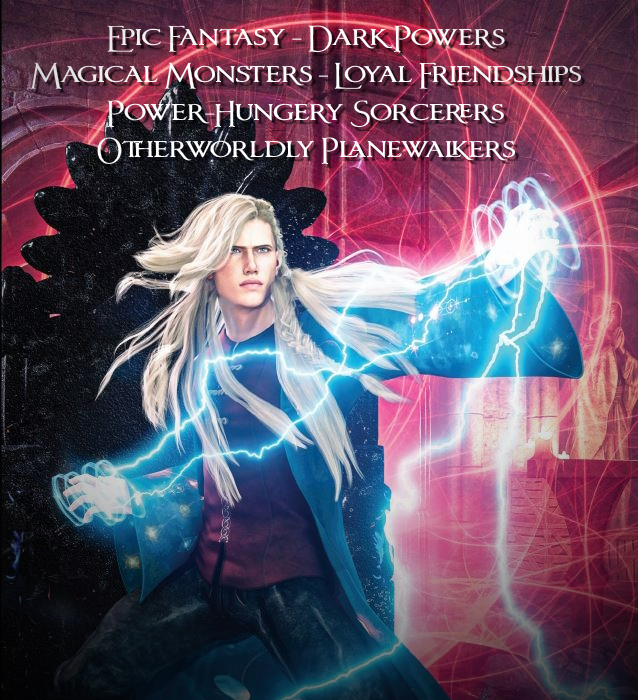
I’ve been working my butt off, thinking through a million things regarding the release of the 10th Anniversary Edition of Saga of the God-Touched Mage, which is a piece of work that holds a big place in my heart simply for the fact that it was my first major leap into this world of being an independently published writer. The fact that it was so successful doesn’t suck eggs, either.
In other words, a lot of stuff is going on in my brain right now.
More on that later, of course. But for now…:
# # #
Lisa and I went to see & Juliet last night.
Lisa enjoyed it completely.
My reactions were mixed, but highly so on both sides of the spectrum. What I liked, I really liked. What I did not like, well, I really did not like.
If you have not seen the play, or if you are not interested in story neep, then maybe this post isn’t for you. If you are, though, here are my thoughts a day later. I won’t really get into plot points, but I note here that I’ll give opinions on elements of the work that are at least in the area code of being spoilerly.
You have been warned.
# # #
As I said, Lisa enjoyed it all. So take this with a grain of salt, I suppose.
I enjoyed the comedic elements of the play, and I thought that a lot of the music was well integrated into the narrative (for those unaware, the presentation is a jukebox, what-if play based on Romeo & Juliet, and including a bunch of pop songs). Pop music is always fun, and these anthems are always going to be good listens.
It’s colorful.
The singing was mostly pretty good. The sets were fun, if a little Spinal Tappy at times. I enjoyed the social consciousness of the script, which feels a little more than dangerous in this day and age.
Lisa completely loved it, and I left the theater happy to have seen it.
What’s not to like, right?
Well…
Um.
There is the story itself.
And the basic premise.
I mean. Simple things like that, right? If you don’t really care about the kinds of liberties that the play takes with the original story, then I think you’ll love this thing, or at least like it. Because if I just look at it for what it is, it’s fine.
But the play does two things that I think disrespect the original material, and that irks me to no end.
First, it makes Romeo into a total douchebag, which is then played for laughter. Fine, I guess. You’re going to make a comedy about female empowerment, you might as well thrust a dagger into the foundation of the boy at the heart of the original story. Maybe that even MUST be done. I don’t know. The original is a tragedy. You’ll have to lighten it up somehow. Who cares if that original story was about a young man who loved his young wife with the utmost sincerity, and a young woman who did the same in reverse? (Yes, the original Romeo is not the most stable of young men. He’s bohemian and privileged. He’s emotional. He’s not particularly wise. But he follows his heart, and he loves Juliet with a truth that shines through all of that.) Let’s ignore that, though, and instead of making our & Romeo be that kind of a character, let’s just make him a narcissistic playboy of an idiot who is only of merit because he’s propped up by the not inconsiderable power of William Shakespeare’s capable prose. Talk about your ultimate Cyrano de Bergerac.
Anyway, that would be fine.
I’m used to that kind of thing, and, as a writer, I suppose you may need to do that to make the comedy work.
The greater issue I’m stewing on now, though, is the sense that the play disrespects the original Juliet. I mean, this is a young woman who makes choices at every stage of Shakespeare’s play. She chooses Romeo over the heavy threat of her parents’ displeasure. She chooses to let Romeo into her life. She chooses to go against the overt weight of her family’s wishes. She chooses to go to the apothecary. And, in the end, she chooses the bodily autonomy of killing herself rather than live the life under the overbearing weight of those same parents.
The original Juliet is a fully empowered woman of her time.
So this script’s choice to make “& Juliet’s” storyline end with her vowing to be her own person really strikes me as discordant.
The original Juliet is a strong woman. This means that, since the “what-if Juliet didn’t kill herself” proposition of the play, is essentially asking “what if the original Juliet was a really a weak young woman, after all, and instead of doing what her heart wanted (joining her true love in death), she chickened out?” What if she acquiesced and now had to face the rest of her life knowing how weak she was? What if every time she thought of Romeo, she saw a person who was stronger in his love for her than she was for him? What does she do now? How can she live with herself?
How does she go forward, understanding she was the weak one?
That is the story the premise sets up for me, but, of course, that is not the play that was written. In retrospect, the longer I look back on it, the more my brain spins out of control, and the more this miss makes me unhappy. If you know me, you know I am all for feminist art and feminist messages, and if you draw your analysis around the play as it’s written, I can see & Juliet being just fine. But when, in the later stages of the play, the Anne Hathaway character (Shakespeare’s wife, not the modern-day actor), says she just wanted to write a story where Juliet got to have a choice, the play essentially jumps the shark.
Ultimately, this is probably why it needs to do to Romeo what it does to him.
I don’t know.
As I said before, it would be tough to write a lighthearted comedy around that premise. But I think that was the assignment, and I think I would adore a play that took that assignment on full-bore. Bonus points for making it a lighthearted comedy.
Alas, for me, while I would likely still walk out of the theater with a sugar high if I were to see it again (and it’s fun enough that I would be fine with seeing it again), thinking back on it now kind of bums me out.
You know, reading your review. This almost sounds like one of those cases where someone had a completely separate story premise and then decided to hitch it to a well-recognized intellectual property.
The key ingredients of Romeo and Juliet don’t seem to be there at all. I second your question of what is the point of invoking this well-worn story if the central premise that the two characters are actually madly in love is not present?
But maybe someone wanted to tell a particular kind of story about feudal times and figured this was the best public domain name recognition for the genre.
I’m pretty sure they had a story they wanted to tell, and did whatever they needed to do in order to tell it. I’d have been happier if, at least, they’d have had Shakespeare defend his work.